Join monthly support groups to talk about issues that affect ex-Muslims.
CEMB currently has one 90-minute online session on the first Wednesday of every month, 6.30-8.00pm UK time and
Event Details
Join monthly support groups to talk about issues that affect ex-Muslims.
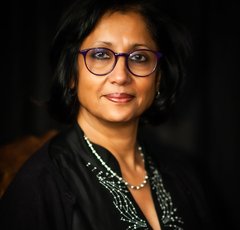
CEMB currently has one 90-minute online session on the first Wednesday of every month, 6.30-8.00pm UK time and a woman’s support group on the second Wednesday of every month, 6.30-8.00pm UK time. The sessions are led by Counselling Psychologist Dr SAVIN BAPIR-TARDY.
If you have never attended a session before, please email hello@ex-muslim.org.uk.
Join monthly support groups to talk about issues that affect ex-Muslims.
CEMB currently has one 90-minute online session on the first Wednesday of every month, 6.30-8.00pm UK time and
Event Details
Join monthly support groups to talk about issues that affect ex-Muslims.
CEMB currently has one 90-minute online session on the first Wednesday of every month, 6.30-8.00pm UK time and a woman’s support group on the second Wednesday of every month, 6.30-8.00pm UK time. The sessions are led by Counselling Psychologist Dr SAVIN BAPIR-TARDY.
If you have never attended a session before, please email hello@ex-muslim.org.uk.
Freedom Lecture with Siham Lachgar: The Price of Activism 21 February 2026, 4pm, De Balie, Amsterdam Get your tickets here.
Blasphemy vs
Event Details
Freedom Lecture with Siham Lachgar: The Price of Activism 21 February 2026, 4pm, De Balie, Amsterdam Get your tickets here.
Blasphemy vs the State: Dissenting Women 21 February 2026, 7:00pm, De Balie, Amsterdam With Maryam Namazie, Yasmin Rehman, Nazmiye Oral and FarAvaz Get your tickets here.
Imagining Iran after the Mullahs
22 February 2026, 3pm, De Balie, Amsterdam
With Maryam Namazie and FarAvaz
Get your tickets here.
Mass protests in Iran appeared to shake the Islamic
Event Details
Imagining Iran after the Mullahs 22 February 2026, 3pm, De Balie, Amsterdam
With Maryam Namazie and FarAvaz Get your tickets here.
Mass protests in Iran appeared to shake the Islamic regime. But the status quo is enforced, for now, through extreme violence. What is needed to bring about a free Iran?
The most recent wave of protests that flared up in Iran at the end of December was violently suppressed by the Islamic regime. Human rights organizations estimate at least 4,500 deaths. The demonstrations and the subsequent violence largely took place in a black box. The regime cut the country off from the internet.
Given its long history of protest, Iranians have repeatedly taken to the streets: student protests in the 1990s, the Green Movement following the contested elections of 2009, and the nationwide uprising of 2022-23 after the death of Mahsa Amini. Under the slogan Zan, Zendegi, Azadi, or Woman, Life, Freedom, a new generation openly challenged the ideological foundations of the Islamic Republic.
As the price of basic goods such as fuel, rice, and chicken rises and livelihoods disappear, cracks in this self-devouring regime, weakened by attack by Israel and the United States, begin to show, and the possibility of a full-scale revolution slowly but surely becomes thinkable. But in the wake of a general rejection of the regime, the open question remains: what is it that Iranians need for a free Iran? And mostly, what does a free Iran look like?